
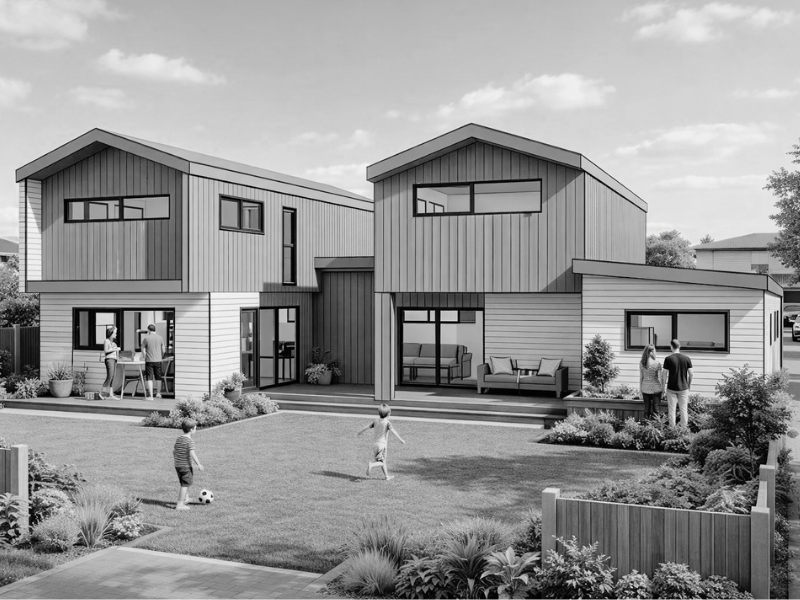
Shared Site & Multi-Generational Design
Thoughtful planning for two or more homes on one site — for family, co-ownership or future flexibility.
RotoSpace applies the same efficient, flexible design thinking used for individual homes across an entire site.
Rather than designing each house in isolation, we look at how the whole site works — including the relationship between homes, privacy, sun, outlook, access, parking and outdoor space.
This could mean two generations of one family living independently on the same property, friends purchasing together, or a site designed so additional homes can be added over time.
The goal is to make better use of the land while still giving each household a home that feels like its own.
Pricing discussed after initial review.
Start with the whole site
Before deciding exactly what each house looks like, we work out how the site needs to function.
We consider:
How many homes the site may reasonably support
Who will live in each home
The size and type of home each household needs
Privacy between dwellings
Sun, outlook and outdoor living
Vehicle access and parking
Shared and private outdoor areas
Opportunities to build or expand in stages
Once the overall site strategy is clear, individual RotoSpace home layouts can be selected and adapted to suit each household.
One design system. Different homes.
The homes do not need to be identical.
A shared site could combine a compact one-bedroom home for a parent, a two-bedroom home for a smaller household and a larger family home — while using the same underlying design logic across all three.
This allows the site to feel considered as a whole without every home having to be designed from scratch.
One possible three-home arrangement
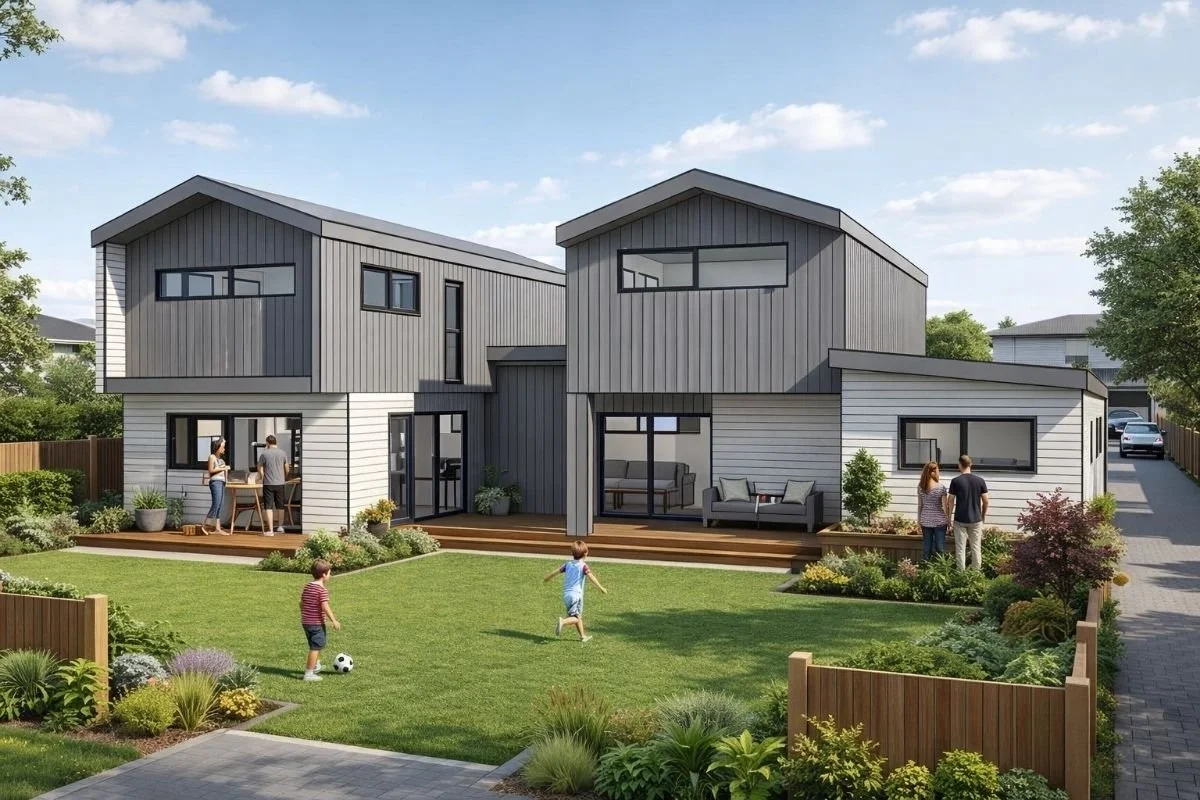
This is one example of how the RotoSpace system can be applied across a shared site.
The actual combination of homes would be developed around the site, the people who will live there and how their needs may change over time.
This example includes:
3-bedroom two level home
2-bedroom two level home
1-bedroom single level home
Shared driveway + outdoor space
Who could this work for?
Shared-site design can suit:
Parents and adult children wanting to live close while remaining independent
Families creating a separate home for grandparents
Siblings or extended whānau sharing land
Friends purchasing a site together
Households looking for a more affordable way to own a home
Landowners wanting to add homes gradually as family needs change
The exact arrangement will depend on the site, planning requirements and the people who will live there.
Floor Areas
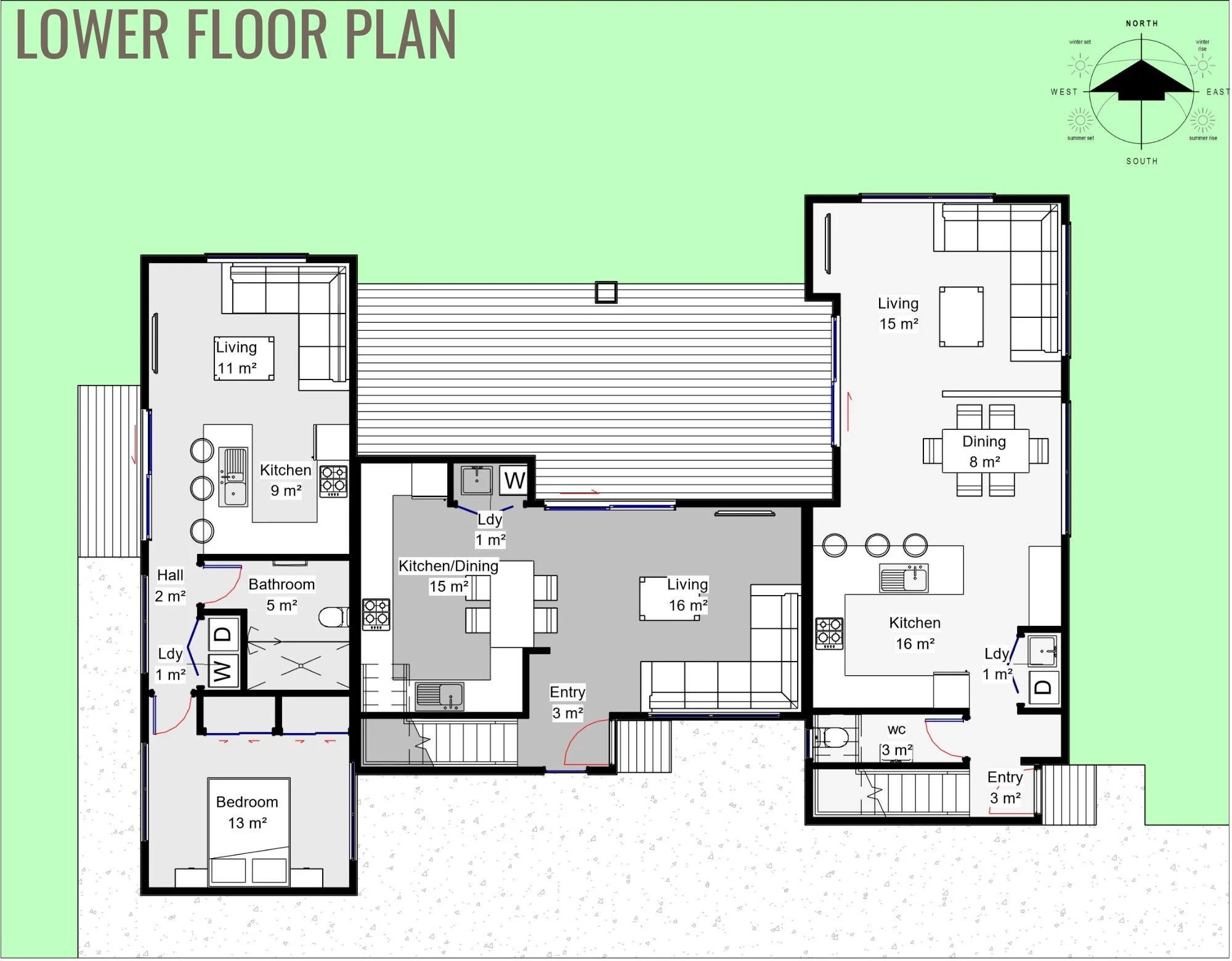
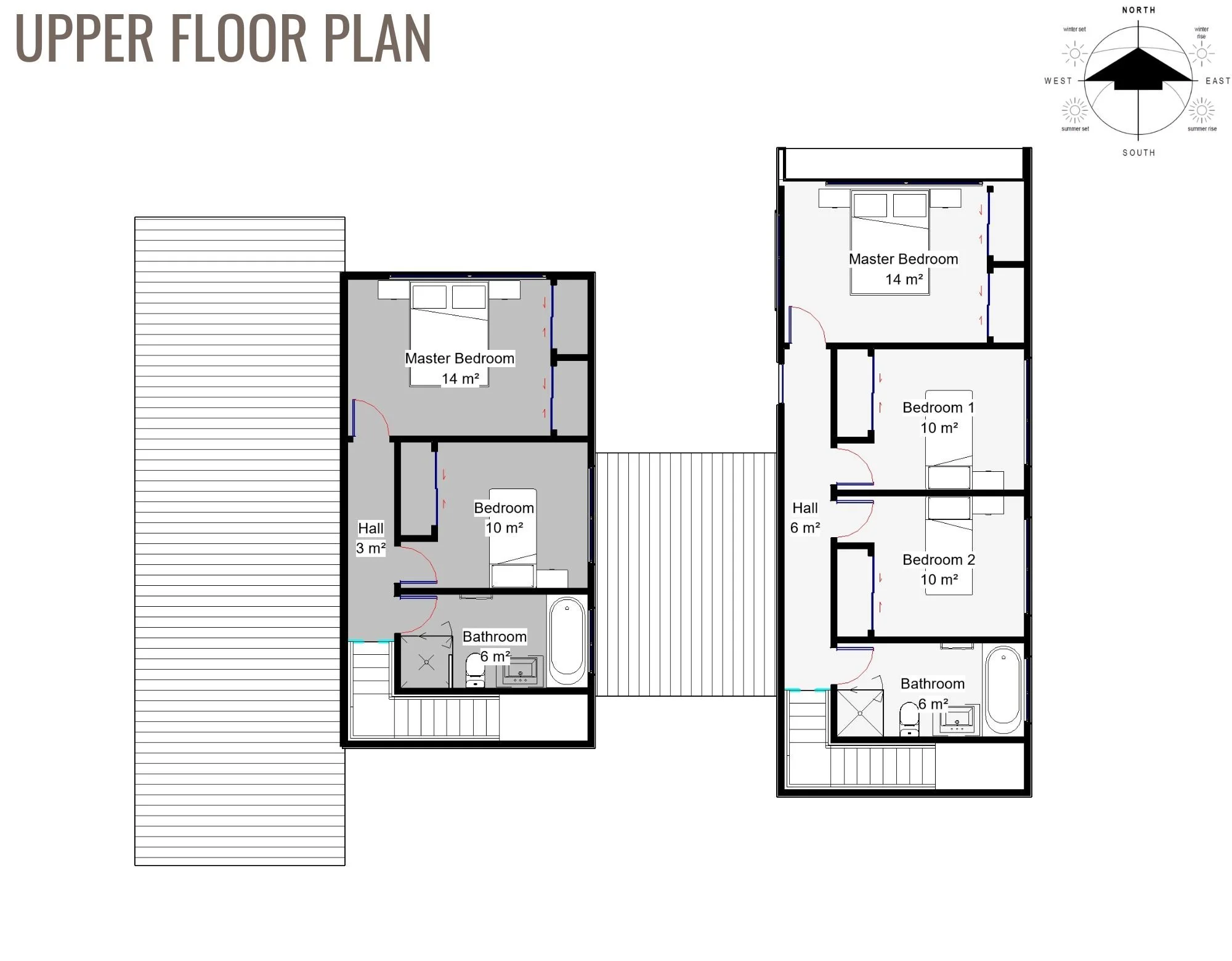
1-bedroom: 46m²
2-bedroom: 78.5m²
3-bedroom: 104m²
TOTAL FLOOR AREA: 228.5m²
These example layouts were developed around sites of approximately 400m² or larger. Actual site requirements will depend on planning rules, access, servicing and the arrangement of the homes.
One possible two-home arrangement
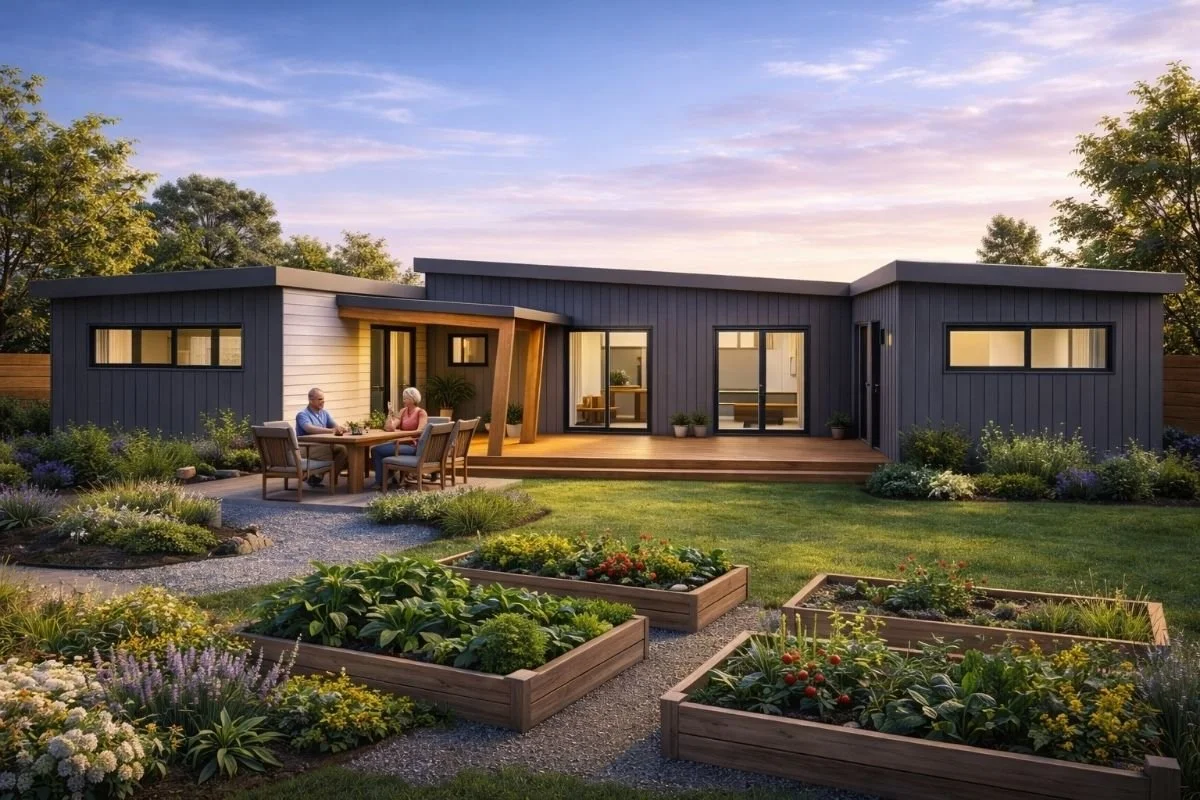
Two homes on one site can create a balance between independence and shared land, while allowing each household to retain its own private home and outdoor space.
This example includes:
2 x Two-bedroom single level homes
Shared driveway + outdoor space
Who could this work for?
A parent or grandparent living independently beside family
Adult children buying alongside parents
Siblings or extended whānau sharing a site
Friends purchasing land together
Two smaller households who want their own homes while sharing the cost of land and some site infrastructure
Landowners wanting to create a second independent home now, with flexibility for the future
Floor Areas
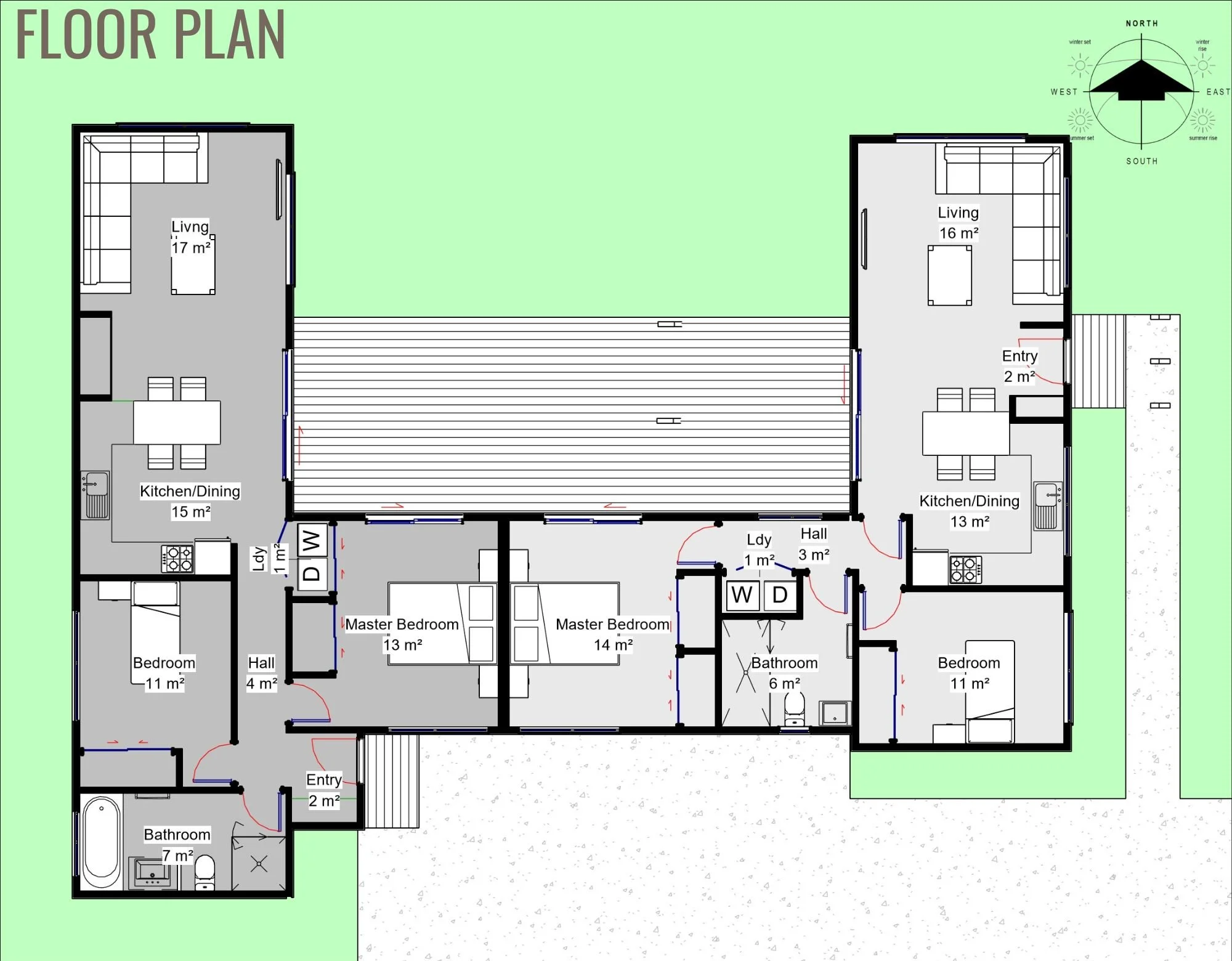
2-bedroom: 70m²
2-bedroom: 75m²
TOTAL FLOOR AREA: 145m²
Why share a site?
A well-planned shared site can create:
Better use of valuable land
More generous shared outdoor space
Independent homes within close reach of family or friends
Opportunities to share some site and infrastructure costs
Greater flexibility as households change over time
The ability to stage development rather than building everything at once
The key is designing the whole site carefully from the beginning, so each home works individually as well as part of the larger arrangement.
Thinking about sharing a site?
You don't need to know exactly how many homes will fit or what each one should look like before getting started.
We can begin by looking at the site, the households involved and what you're trying to achieve, then work out the most sensible design direction.